


Primarily, LinkedIn was a portal used for job hunting, but as time passed by, LinkedIn has evolved as a powerhouse. LinkedIn has become popular as a sales and marketing channel. Especially, every B2B company now uses the platform not just to create a profile but to promote their brand and product.
Whether you want to attract leads, build a personal brand, or land your next role, LinkedIn has become the ultimate playground for professionals.
Before we start with the LinkedIn Marketing Tips. Let’s know about LinkedIn itself.
LinkedIn is the world’s largest professional networking platform, with over 1 billion members across 200+ countries. What started as a digital résumé hub has transformed into a dynamic ecosystem where professionals connect, share insights, and build influence.
- 🌍 Global reach: It connects decision-makers, entrepreneurs, and professionals across industries.
- 💼 Career growth: Still a powerful tool for job seekers and recruiters, but now equally vital for thought leadership.
- 📈 Business development: A trusted space for B2B lead generation, brand positioning, and relationship building.
- 🎯 Content hub: Posts, articles, and videos allow individuals and companies to showcase expertise and engage audiences.
- 🤝 Community building: Groups, events, and newsletters foster niche communities and ongoing conversations.
In short, LinkedIn has evolved into a professional powerhouse—a hybrid of networking, marketing, and knowledge-sharing. Understanding this transformation is key before we dive into actionable marketing strategies.
What is LinkedIn growth hacking about?
LinkedIn growth hacking is all about using creative and smart strategies to grow your network, stand out from your competitors, and attract B2B leads.
LinkedIn growth is not only about presenting on the platform, posting regularly, and waiting to build networks. To make your LinkedIn work for you to generate good results, here are some simple hacks that you can follow:
1. Optimization of your profile
Think of your LinkedIn profile as your business card. Whether you interact or want to get in touch with other LinkedIn users, your profile acts as a business card that shows your credibility.
- LinkedIn profile: CEO | Marketing Manager
- LinkedIn profiles: Marketing Manager | Expert Lead Generation to Scale Business Revenue | 125% ROI
The 2 examples of LinkedIn profiles give a ton of information about who you are and what you do, which emphasizes your profile credibility.
Who you are? – Marketing Manager
What do you do? – Expert lead generation to scale business revenue
Performance—125% ROI
Pro tip: Include a percentage on your LinkedIn profile so the users get an idea of how well your performance and your proficiency.
Always keep up-to-date about your current location, job title, skills, education, industry, and summary.
2. Professional pictures and a banner
A cute picture with family and friends is nice, but it’s totally good on Facebook and Instagram. But when it comes to the LinkedIn professional network, choose an appropriate photo that looks professional.
And a lot of people also ignore the banner or use irrelevant pictures that are not relevant to the business or the product. Your profile and banner are more than pictures. They represent your personal brand. Also, ensuring a persuasive headline might grab your prospect’s attention.
Pro tip: Headlines with specific metrics can boost your profile by 40%.
3. Refine your profile URL
By default, LinkedIn assigns a random number and characters, which makes it chaotic. But you can customize it. This makes your profile look polished and also helps rank higher in Google and LinkedIn searches.
Default URL: linkedin.com/in/christopher-bob-543b2a1
Optimized URL: linkedin.com/in/christopherbob-marketing
4. Uncover Insights from SSI
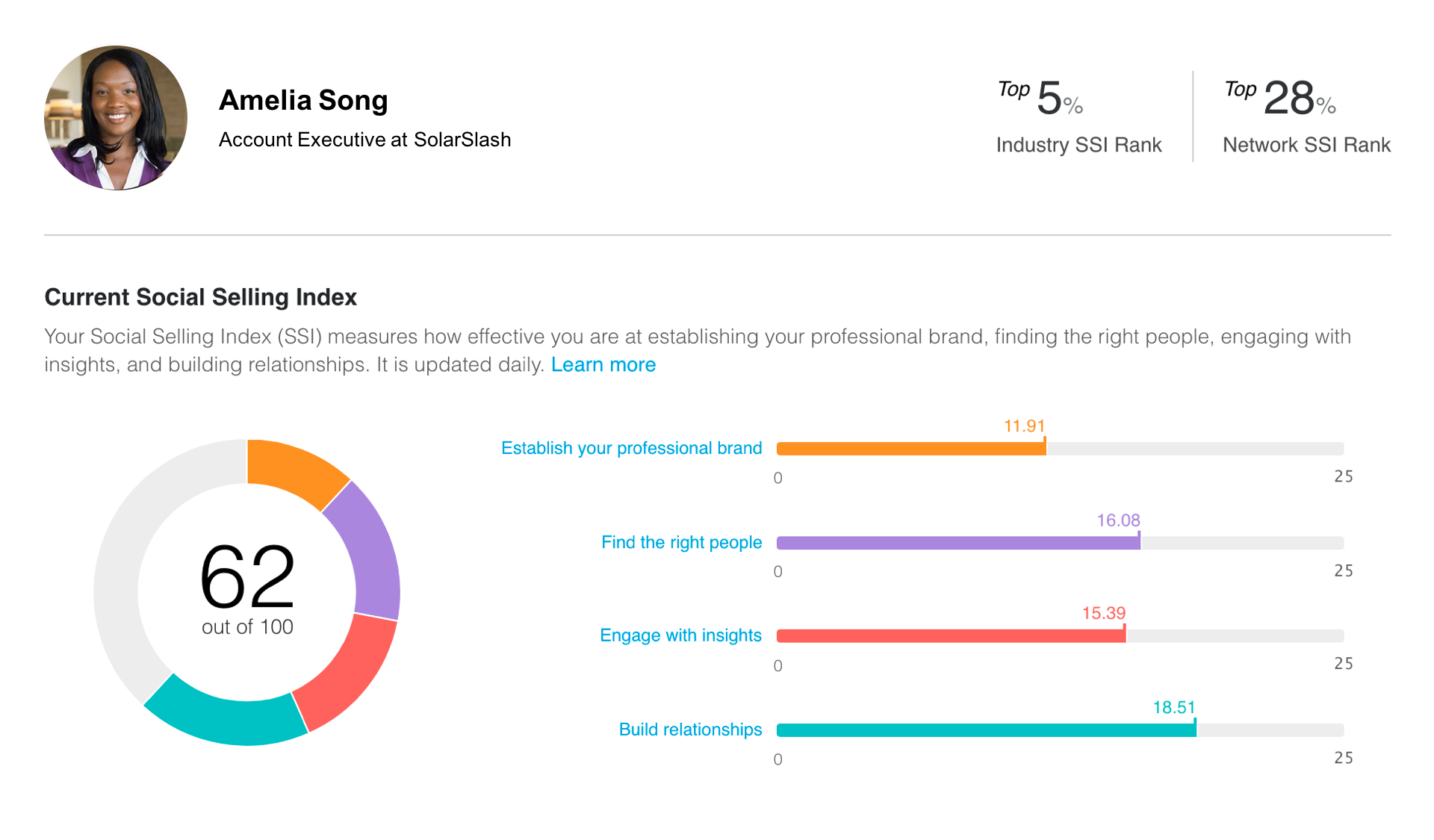
Social Selling Index (SSI) is a metric that measures how well your proficiency level is for social selling on LinkedIn.
It contains four major components for a successful social selling strategy:
1. Establishing your professional brand—Do you actively participate on LinkedIn to grow your authority?
2. Finding the right people—Are you finding the right targeted prospects and gaining followers?
3. Engaging with insights—Are you actively posting, commenting, and sharing relevant posts to gain attention?
4. Building relationships—Are you building trusted connections?
Why is SSI necessary?
78% of social sellers outperform their peers who don’t leverage the social selling index.
5. Post Regularly
Posting quality content regularly is very crucial for growth hacking. It is a way to build a massive network. It rewards those who are constantly putting in their work.
Avoid excessive self-promotion. Constant self-promotion without providing any value to the users is annoying. It’s a platform where you share your thoughts and ideas and foster relations.
Maintain balance post content:
• 4 Industry-related posts
• 1 Own original curated content
• 1 promotional post about your business
6. Being Active in LinkedIn Groups
LinkedIn groups are places where users can share their similar interests, knowledge, and experience by actively participating in active LinkedIn groups. However, many found that it is less effective, but I assume this still works for some specific niches. By joining 5-10 highly relevant groups.
7. Review your analytics.
You should know what works and what does not for your LinkedIn growth to consistently reach the sales quota. Keep an eye on market trends that change all the time so that you can plan accordingly. Use LinkedIn analytics tools to monitor your progress.
Conclusion
These are the essential hacks to succeed in LinkedIn in 2025. You just need to be consistent, share your thoughts and ideas, and give value to the users. So go ahead, work the strategy, share your story, and let LinkedIn take care of the rest.